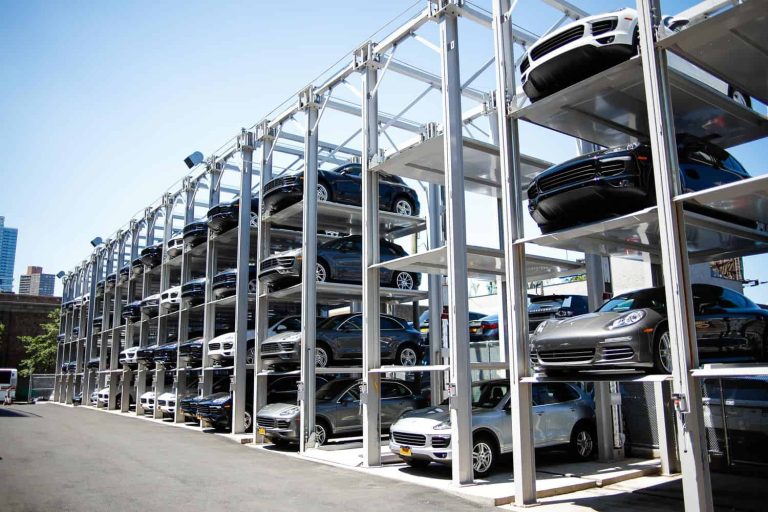

Understanding smart parking benefits is essential for commercial building owners, developers, and facility managers who seek to improve user experience, increase operational efficiency, and enhance the value of their properties. Smart parking systems are rapidly becoming a key feature in modern commercial developments as cities grow more crowded and businesses aim to provide better service to customers and employees.
One of the most significant smart parking benefits is improved space utilization. Commercial buildings often face limitations in land area, yet must accommodate a large number of vehicles daily. Traditional parking structures require ramps, wide lanes, and multiple floors, consuming considerable space. Smart parking systems eliminate the need for these features by using vertical automation, mechanical platforms, and robotic movement. This allows commercial buildings to store far more vehicles in a much smaller footprint, maximizing the use of available land and increasing revenue potential.
Another major benefit is operational efficiency. In traditional garages, drivers spend time navigating through the building, searching for empty spots, and dealing with congestion. This leads to delays, user frustration, and unnecessary carbon emissions. Smart parking systems automate the entire process. Drivers leave their cars in a designated entry cabin, and the system carefully handles the storage. This reduces traffic flow inside the property, decreases waiting time, and significantly improves customer satisfaction.
Safety is one of the most attractive smart parking benefits for commercial buildings. Since drivers never enter the parking zone itself, the risks of theft, vandalism, collisions, and scratches are minimized. Vehicles are stored in a controlled environment equipped with sensors, fire detection systems, surveillance cameras, and automated monitoring tools. For businesses, this enhances the building’s reputation and reduces liability.
Smart parking systems also support sustainability goals, an important consideration for modern commercial projects. They consume less energy than traditional garages because they do not require continuous lighting, ventilation systems, or large machinery. Instead, they operate only when vehicles are moved. LED lighting, high-efficiency motors, and intelligent control systems help reduce energy consumption. This aligns with green building certifications and environmental regulations.
Another noteworthy smart parking benefit is improved traffic management around commercial buildings. Traditional parking entrances often cause congestion, especially during peak hours. With automated parking, vehicles drop off quickly in the entry cabin and leave immediately, reducing external traffic impact. This is particularly beneficial for shopping malls, office towers, hotels, and hospitals that experience high visitor turnover.
Smart parking systems also improve accessibility for users. Individuals with disabilities, elderly drivers, and visitors unfamiliar with the facility often struggle with navigating traditional parking decks. Automated parking removes these challenges entirely. The system handles everything, offering a smoother and more inclusive user experience.
From a financial perspective, the smart parking benefits are long-term and substantial. Although the initial installation cost may be higher than conventional garages, the operational savings are significant. Reduced staffing requirements, lower maintenance needs, minimal lighting usage, and high durability all contribute to lower running costs. Additionally, the ability to accommodate more cars increases revenue for commercial buildings that depend on parking fees.
Smart parking systems also enhance the overall image of a commercial property. Buildings equipped with advanced parking technology are perceived as modern, innovative, and customer-focused. This can attract more tenants, increase property value, and strengthen brand reputation. Commercial facilities such as business towers, malls, airports, and mixed-use developments increasingly integrate smart parking solutions to stay competitive.
In summary, the smart parking benefits for commercial buildings are extensive and impactful. They include space optimization, enhanced safety, operational efficiency, sustainability, and improved user experience. As urban areas continue to develop, smart parking systems are becoming a vital component of modern commercial infrastructure.