The future of smart parking is becoming increasingly clear as cities continue to expand, traffic density rises, and land availability becomes more limited. Urban planners and developers around the world are recognizing that traditional parking structures can no longer keep up with the demands of modern life. Smart parking systems — powered by automation, sensors, robotics, and digital management — are transforming how vehicles are stored, accessed, and managed. These systems are shaping the future of mobility in ways that are sustainable, efficient, and user-friendly.
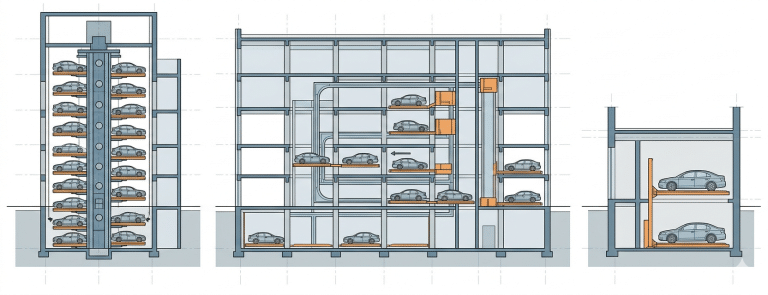
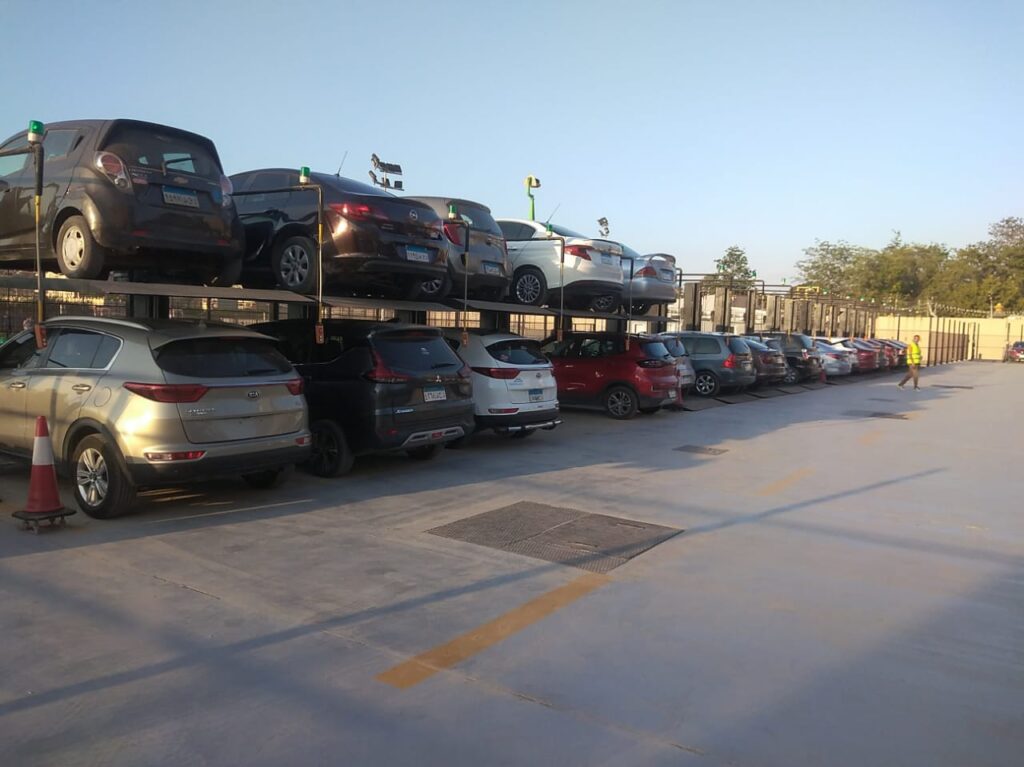
One of the main reasons smart parking represents the future is space optimization. As land prices rise and urban populations grow, dedicating large horizontal areas to parking is no longer feasible. Smart parking systems use vertical and automated designs, enabling them to accommodate significantly more vehicles within a much smaller footprint. This makes them ideal for crowded cities, commercial complexes, hospitals, and residential towers.
Another major driver is efficiency. Traditional parking requires drivers to navigate ramps, search for available spots, and deal with congestion inside the garage. This not only wastes time but also contributes to traffic delays and increased emissions. Smart parking systems eliminate this issue by automating the storage and retrieval process. Drivers simply leave their vehicles in an entry cabin while the system takes over. The result is a faster, smoother, and far more convenient experience.
Sustainability is also a central factor in the future of smart parking. These systems consume significantly less energy than conventional parking garages. They do not require continuous lighting, ventilation, or human-operated machinery. Instead, they use LED lighting, energy-efficient motors, and intelligent systems that operate only when needed. By reducing land usage, material costs, and energy waste, smart parking contributes to greener and more eco-friendly urban development.
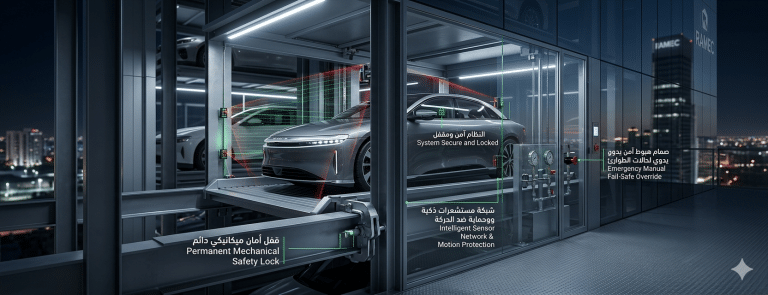
Safety and security are additional reasons why these systems represent the future. In a fully automated smart parking environment, drivers never enter the parking area itself, which eliminates risks of theft, vandalism, accidents, and vehicle damage. Advanced sensors, fire detection systems, and automated monitoring ensure an environment that is controlled and secure at all times. This level of safety simply cannot be matched by traditional garages.
Technology continues to accelerate the evolution of smart parking. Sensors embedded in entry cabins can identify vehicle size, weight, and position with incredible accuracy. AI algorithms optimize parking slot assignment, decreasing retrieval time and improving flow. IoT devices allow remote monitoring and predictive maintenance, reducing downtime and increasing overall reliability. As these technologies advance, smart parking systems will become even more efficient and intelligent.
The integration of digital platforms is another defining feature of the future of smart parking. Users can reserve parking spaces through mobile apps, receive notifications when their vehicle is ready, and access real-time usage data. For operators, digital analytics provide valuable insights into system performance, user patterns, and maintenance requirements. This digital transformation enhances the overall parking experience for both users and facility managers.
Economic advantages also contribute to the growing demand. Although the initial investment in automated parking systems can be higher, the long-term savings are significant. Reduced staffing needs, lower energy consumption, minimal maintenance requirements, and the ability to accommodate more vehicles mean that the return on investment is typically strong. This makes smart parking a financially sustainable solution for many types of developments.
In conclusion, the future of smart parking is driven by increasing urbanization, advanced automation, sustainability goals, and the need for safe and efficient mobility infrastructure. As cities continue to evolve, smart parking systems will play a crucial role in shaping the future of transportation and urban planning.