With the rapid expansion of technology-driven real estate and modern commercial developments, automated vehicle handling has become a core element of premium infrastructure. Despite the immense efficiency these technologies deliver, several common concerns naturally arise among end-users and property developers: Are these lifts fully secure? What happens during a power outage? How is a vehicle’s stability guaranteed?
In this guide, we dive deep into the engineered safety frameworks integrated into modern smart parking systems to demonstrate how they provide ultimate protection and operational reliability.
The Three Pillars of Safety in Mechanical Parking
Advanced automated parking configurations rely on multi-layered, redundant safety mechanisms. This layout ensures that if one component requires maintenance or experiences a glitch, an secondary mechanical backup instantly engages. These critical pillars include:
1. Automatic Mechanical Locking Systems
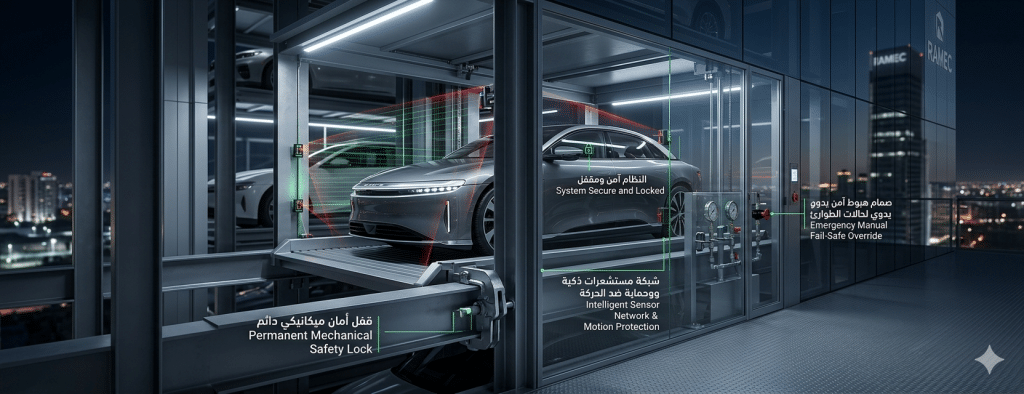
A frequent misconception is that vehicles remain suspended solely by active hydraulic oil pressure or wire rope tension. In reality, once a platform or lift reaches its designated tier, heavy-duty mechanical safety latches automatically engage, anchoring the platform physically into the structural steel frame. Consequently, even in the event of a total pressure drop or electrical failure, the vehicle remains securely locked in place with zero risk of movement.
2. Intelligent Sensor Networks
High-caliber smart parking systems are equipped with a dense network of photoelectric sensors, weight detectors, and dimensional scanners. This sensor array continuously performs the following:
-
Verifies that the vehicle is perfectly centered on the platform before initiating any movement.
-
Triggers an instantaneous emergency stop if any unexpected motion or obstruction (such as a person or a pet) enters the lifting zone.
-
Confirms that the vehicle’s height, width, and weight perfectly match the designated slot specifications.
3. Emergency Overrides and Manual Fail-Safes
To counter municipal power grid failures, these systems are engineered with multiple operational alternatives. They can be wired directly into a development’s backup generators or operated via built-in manual release valves. These valves allow certified maintenance technicians to lower vehicles smoothly and safely to ground level entirely without electrical power.
Global Compliance and Comprehensive Insurance Coverage
Beyond the mechanical engineering embedded within the hardware, industry-leading providers ensure all structures comply with rigid global directives (such as the European CE certification) and secure official clearances from Civil Defense authorities. To deliver absolute peace of mind to both real estate developers and car owners, these systems are backed by comprehensive liability insurance policies that safeguard all vehicles within the structure against unforeseen operational hazards.